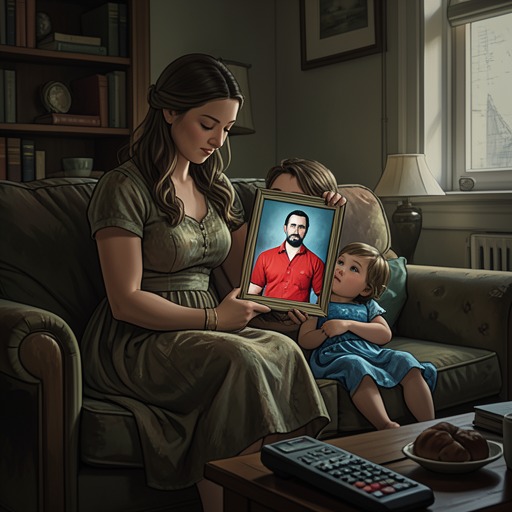
Cliff Riker
The RainmakerCliff Riker’s repeated violence toward his wife, Kelly Riker, turns a troubled young marriage into a cycle of fear, separation, and renewed danger. His eventual death during a struggle with Rudy Baylor is the culmination of that pattern, after earlier efforts to seek help failed to keep Kelly safe.
Identity and Background
Cliff is nineteen when Rudy learns about him. He drives a forklift, drinks heavily, and still dreams of playing major-league baseball. Kelly describes him as a former school athlete whose ambitions have not adjusted to adult life. The novel offers this background through Kelly and through Rudy’s impressions; it does not give Cliff an independent account of himself.
Cliff and Kelly left her small hometown after she became pregnant shortly before turning eighteen. They married in Memphis in a civil ceremony, but she miscarried about a week later. The pregnancy had already estranged Kelly from her family: she says they were humiliated, and that she has not spoken to them since she left. The marriage therefore begins amid lost plans and isolation, circumstances that later matter as Kelly tries to leave without family support.
The abuse is not presented as a single outburst. Police records and reports gathered by Deck Shifflet establish earlier episodes: an initial call after a fight, followed months later by an incident that left Kelly hospitalized with broken ribs. She declined to testify, and the case was dropped. In the current episode, neighbors again call the police after a violent dispute; Cliff is arrested, while Kelly receives hospital care. The recurrence makes his drinking and violence part of an established pattern, not an isolated marital quarrel.
Pressure on Kelly and the Court Case
While Kelly is recovering in the hospital, Cliff accompanies her to the cafeteria, where Rudy Baylor sees them together. They sit in strained silence until their argument turns to whether Kelly will testify against Cliff. He grows angry when she has not decided, tries to quiet his voice in public, and presses her to drop the matter, invoking the possibility that he could go to jail. Their exchange makes the legal case another point of conflict within the marriage: Kelly’s testimony could expose his violence, while Cliff tries to control whether she gives it.
At Cliff’s court appearance, Kelly is absent and the prosecutor reports that the charges are being dropped for lack of evidence because the victim will not testify. The judge notes that this is the second such case and warns Cliff to get help, adding that he will not dismiss the charges if they return. Cliff answers in a rehearsed, apologetic manner. The paperwork is signed, and he leaves the courthouse free, while Kelly remains at home with a broken ankle. Her absence is not indifference to the case: she is afraid of being beaten again. The dismissal shows how the threat that keeps her from testifying also helps Cliff evade prosecution.
Escalation and Death
The dismissal of the earlier charges does not end the danger. After another assault, this time following a dispute over Christmas bills, Kelly Riker hides with her friend Robin and seeks help at a crisis center for abused women. Rudy Baylor visits her and agrees to file for divorce; the papers also request an immediate order requiring Cliff Riker to stay away from her. Cliff is released from jail and calls Robin, threatening her as he searches for Kelly. With few people able to shelter her, Kelly agrees to go to a confidential refuge.
When Kelly later returns to the apartment to collect clothes, she and Rudy believe Cliff is away at a softball game. He arrives while they are preparing to leave and attacks Rudy with the aluminum softball bat associated with earlier violence. Rudy fights back, takes the bat, and strikes Cliff; Kelly intervenes and tells Rudy to stop. Cliff dies. The weapon that had repeatedly made Kelly’s home unsafe becomes the instrument of a fatal struggle, and the attempt to leave the marriage ends in a death neither Rudy nor Kelly had planned.
Kelly takes the bat from Rudy and tells him to leave, recognizing that his presence could expose his role in what happened. Rudy departs and watches from nearby as police arrive. Officers find Cliff dead and take Kelly away, initially believing she killed him. Rudy goes to the police station and identifies himself as her lawyer. During questioning, Kelly describes years of abuse, including prior assaults that resulted in arrests and incidents never reported to police. Rudy tells the detectives that he filed for divorce and that a judge had ordered Cliff to stay away from her. The scene leaves Cliff’s death inseparable from the history of violence and failed protection that preceded it.
Narrative Role and Significance
Cliff is presented almost entirely through the accounts of Kelly Riker, the police and medical records gathered by Deck Shifflet, and Rudy Baylor’s observations. The absence of an independent account keeps attention on the consequences of his conduct rather than offering an explanation that might soften it. Even his hopes of playing professional baseball and his former status as a school athlete reach the reader through other people. Against that limited portrait, the recurring pattern of assaults, threats, and Kelly’s fear is concrete and cumulative.
His story also exposes the gap between formal remedies and actual safety. Earlier charges are dropped when Kelly does not testify, and the judge’s warning at the later hearing does not prevent further violence. After another assault, the available protection depends on a friend’s help and a confidential refuge; even the divorce papers and a court order do not keep Cliff from confronting Kelly when she returns for her belongings. The progression makes his death the endpoint of a danger that has repeatedly outlasted arrests, court proceedings, and attempts to leave, rather than an isolated turn in the plot.